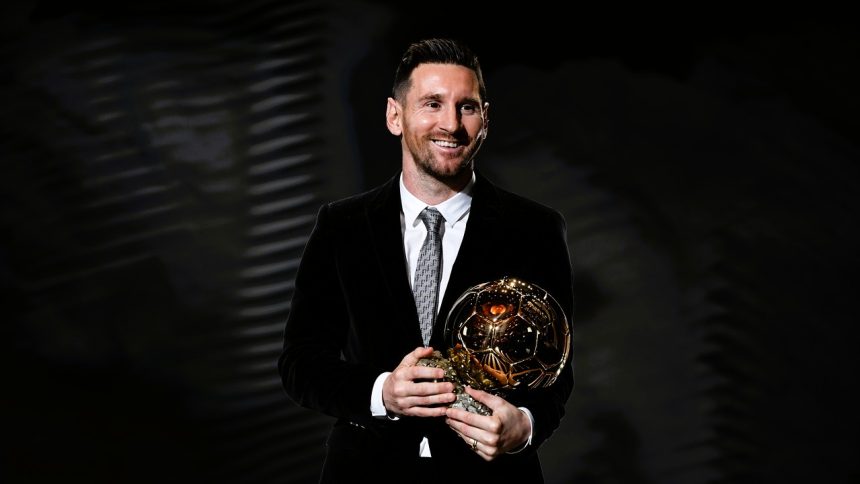








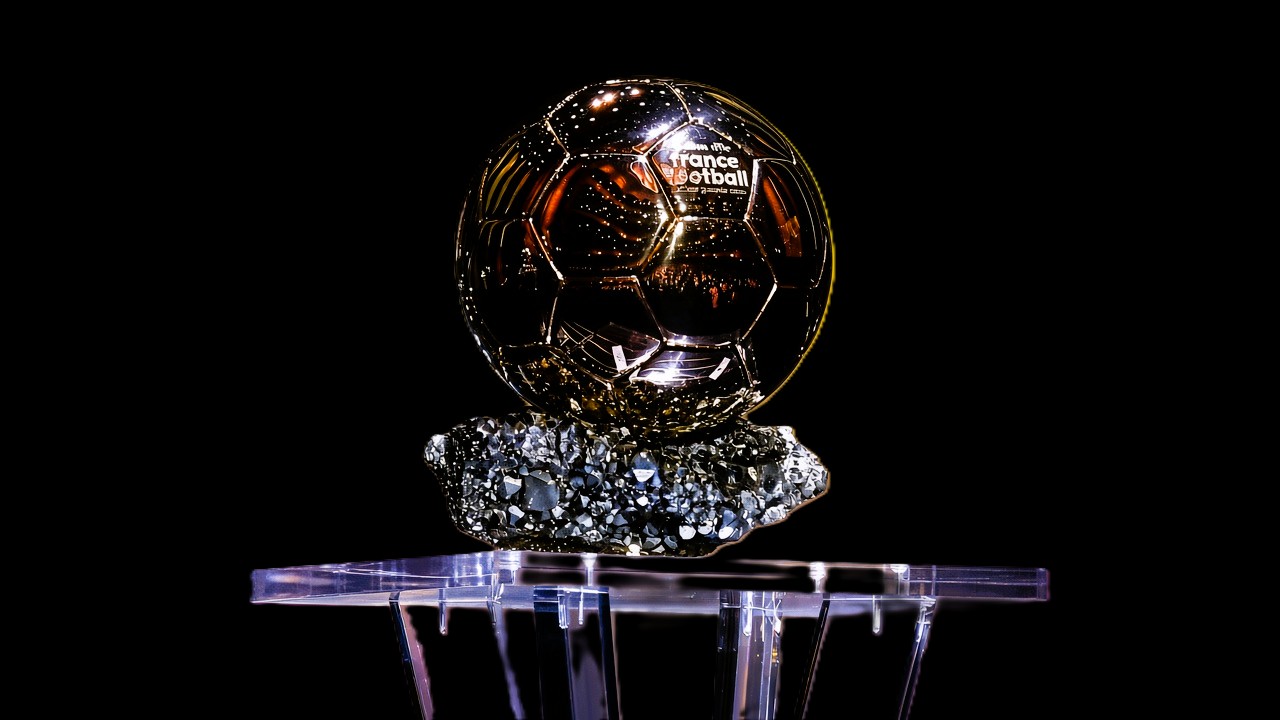

Argentina and France share the most men’s Ballon d’Or wins, with eight each. Argentina’s eight all belong to Lionel Messi. France’s eight are split across six different players.
Winners have represented 20 countries or historical national teams since Stanley Matthews took the first award in 1956. Five of them — Argentina, France, Germany, the Netherlands and Portugal — account for 37 of the 69 men’s awards presented.
The latest men’s winner is Ousmane Dembélé of France, who won in 2025. This article counts each award according to the nationality shown in the official Ballon d’Or record.
Ballon d’Or Winners by Country
Argentina and France lead the table with eight Ballon d’Or wins each. The figures below count every men’s award from 1956 through 2025, with 2020 excluded because no award was presented.
| Rank | Country | Ballon d’Or Wins | Winning Players |
| 1 | Argentina | 8 | Lionel Messi (8) |
| 1 | France | 8 | Raymond Kopa (1), Michel Platini (3), Jean-Pierre Papin (1), Zinedine Zidane (1), Karim Benzema (1), Ousmane Dembélé (1) |
| 3 | Germany / West Germany | 7 | Gerd Müller (1), Franz Beckenbauer (2), Karl-Heinz Rummenigge (2), Lothar Matthäus (1), Matthias Sammer (1) |
| 3 | Netherlands | 7 | Johan Cruyff (3), Ruud Gullit (1), Marco van Basten (3) |
| 3 | Portugal | 7 | Eusébio (1), Luís Figo (1), Cristiano Ronaldo (5) |
| 6 | Brazil | 5 | Ronaldo (2), Rivaldo (1), Ronaldinho (1), Kaká (1) |
| 6 | England | 5 | Stanley Matthews (1), Bobby Charlton (1), Kevin Keegan (2), Michael Owen (1) |
| 6 | Italy | 5 | Omar Sívori (1), Gianni Rivera (1), Paolo Rossi (1), Roberto Baggio (1), Fabio Cannavaro (1) |
| 9 | Spain | 4 | Alfredo Di Stéfano (2), Luis Suárez (1), Rodri (1) |
| 10 | Soviet Union | 3 | Lev Yashin (1), Oleg Blokhin (1), Igor Belanov (1) |
| 11 | Bulgaria | 1 | Hristo Stoichkov |
| 11 | Croatia | 1 | Luka Modrić |
| 11 | Czech Republic | 1 | Pavel Nedvěd |
| 11 | Czechoslovakia | 1 | Josef Masopust |
| 11 | Denmark | 1 | Allan Simonsen |
| 11 | Hungary | 1 | Flórián Albert |
| 11 | Liberia | 1 | George Weah |
| 11 | Northern Ireland | 1 | George Best |
| 11 | Scotland | 1 | Denis Law |
| 11 | Ukraine | 1 | Andriy Shevchenko |
The country totals follow the nationality shown in the official Ballon d’Or record. Germany’s total therefore includes West German winners, while Soviet Union and Czechoslovakia remain separate historical entries. Alfredo Di Stéfano is listed as Spanish for his 1957 and 1959 victories, while Omar Sívori is listed as Italian.
Countries With the Most Ballon d’Or Wins
Argentina’s eight wins all belong to one player: Lionel Messi, who won the award in 2009, 2010, 2011, 2012, 2015, 2019, 2021 and 2023. Our guide to who has won the most Ballon d’Or awards covers his record in full.
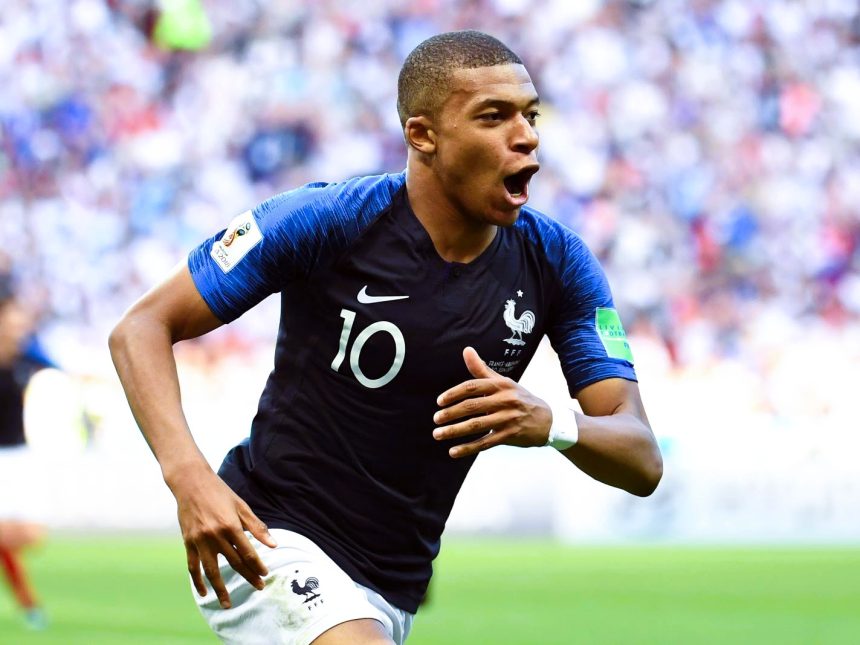
France’s eight wins have been shared by six different players, more than any other country.
Germany’s seven wins came between 1970 and 1996, with Gerd Müller, Franz Beckenbauer, Karl-Heinz Rummenigge, Lothar Matthäus and Matthias Sammer among the country’s winners. Beckenbauer and Rummenigge won twice each.


The Netherlands’ seven wins came from three players between 1971 and 1992. Cruyff won in 1971, 1973 and 1974. Gullit won in 1987, and Van Basten won in 1988, 1989 and 1992.
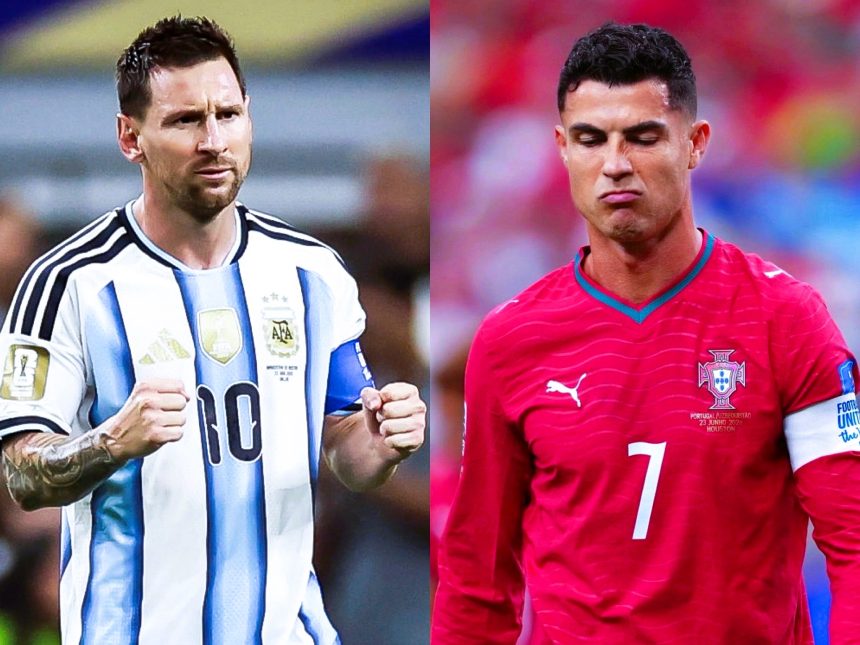
Portugal’s seven wins comprise Ronaldo’s five, plus Eusébio in 1965 and Figo in 2000.
Brazil, England and Italy have five wins each, but their totals came from different patterns. Brazil’s five were spread across four players between 1997 and 2007, England’s across four players from 1956 to 2001, while all five of Italy’s wins came from different players.
Which Countries Have Produced Multiple Ballon d’Or Winners?
Total wins and different winners measure different things. Total wins counts every award. Different winners counts the individual players.
Messi shows the gap. His eight awards make Argentina the joint leader on wins. They make Argentina a one-winner country on players.
Nine countries have produced more than one different winner:
| Country | Different Winners | Total Wins |
| France | 6 | 8 |
| Germany | 5 | 7 |
| Italy | 5 | 5 |
| Brazil | 4 | 5 |
| England | 4 | 5 |
| Netherlands | 3 | 7 |
| Portugal | 3 | 7 |
| Spain | 3 | 4 |
| Soviet Union | 3 | 3 |
France has the most different winners, with six. Germany and Italy follow with five each. Italy’s five wins came from five different players, while the Soviet Union’s three wins also came from three different players.
Countries With Only One Ballon d’Or Winner
These countries have produced one different men’s Ballon d’Or winner each, with that player accounting for the country’s only award.
- Bulgaria — Hristo Stoichkov (1994)
- Croatia — Luka Modrić (2018)
- Czechoslovakia — Josef Masopust (1962)
- Czech Republic — Pavel Nedvěd (2003)
- Denmark — Allan Simonsen (1977)
- Hungary — Flórián Albert (1967)
- Liberia — George Weah (1995)
- Northern Ireland — George Best (1968)
- Scotland — Denis Law (1964)
- Ukraine — Andriy Shevchenko (2004)
How the Ballon d’Or Changed After 1995
The Ballon d’Or changed significantly in 1995. The award opened to players of all nationalities, although they still had to play for a club in a European league. Before 1995, it was restricted to European players.
George Weah became the first player from a non-European national team to win the Ballon d’Or when he took the prize in 1995 with Liberia. His victory marked a major expansion in the geographic representation of the award.
The award became fully global in 2007, removing the remaining European-club restriction. Since then, winners have continued to come from countries across Europe, South America and Africa, while the overall list has become more geographically diverse.
Which Countries Have Won the Ballon d’Or Since 1995?
Since the 1995 expansion, winners have come from Liberia, Brazil, France, Portugal, England, Czech Republic, Ukraine, Italy, Argentina, Croatia, Spain and Germany.
Argentina’s eight wins all fall in this period. Portugal’s modern total is dominated by Ronaldo. France added Zidane, Benzema and Dembélé. Brazil secured five awards in a concentrated window. The period also produced first-time winners for Croatia, Ukraine and the Czech Republic.
| Country | Wins Since 1995 | Winners |
| Argentina | 8 | Messi |
| Portugal | 6 | Figo, Cristiano Ronaldo (5) |
| Brazil | 5 | Ronaldo (2), Rivaldo, Ronaldinho, Kaká |
| France | 3 | Zidane, Benzema, Dembélé |
| Germany | 1 | Sammer |
| England | 1 | Owen |
| Czech Republic | 1 | Nedvěd |
| Ukraine | 1 | Shevchenko |
| Italy | 1 | Cannavaro |
| Croatia | 1 | Modrić |
| Spain | 1 | Rodri |
| Liberia | 1 | Weah |
Argentina has eight Ballon d’Or wins from 1995 onward, all belonging to Lionel Messi. Portugal has six, with Luís Figo winning once and Cristiano Ronaldo winning five times.
The Netherlands has won none since 1995, having taken its last award in 1992.
Ballon d’Or Winners by Country FAQs
Which country has the most Ballon d’Or wins?
Argentina and France are tied for the most men’s Ballon d’Or wins, with eight each. Argentina’s eight belong to Lionel Messi, while France’s eight are shared by six different players.
How many countries have produced Ballon d’Or winners?
Twenty countries or historical national teams appear in this article’s classification of men’s Ballon d’Or winners from 1956 through 2025.
Which country produced the first Ballon d’Or winner?
England. Stanley Matthews won the inaugural award in 1956.
Which country has produced the most different Ballon d’Or winners?
France has six different winners. Italy has five.
Who was the first non-European Ballon d’Or winner?
George Weah of Liberia won in 1995, becoming the first player from a non-European national team to win the Ballon d’Or.
Who won the Ballon d’Or in 2025?
Ousmane Dembélé of France.
Conclusion
Men’s Ballon d’Or winners have represented 20 countries or historical national teams since Stanley Matthews won the inaugural award in 1956. Argentina and France currently share the highest total, with eight wins each.
The distribution also shows how the award has expanded beyond its original European focus.
George Weah’s 1995 victory was the first by a player from a non-European national team, and the award became fully global in 2007.
For the complete year-by-year history, including every winner from 1956 onward, see our Ballon d’Or Winners List.